Structuring Commercial Insurance Claim Workflows for Contractors
Preservation Insurances
2024
Overview
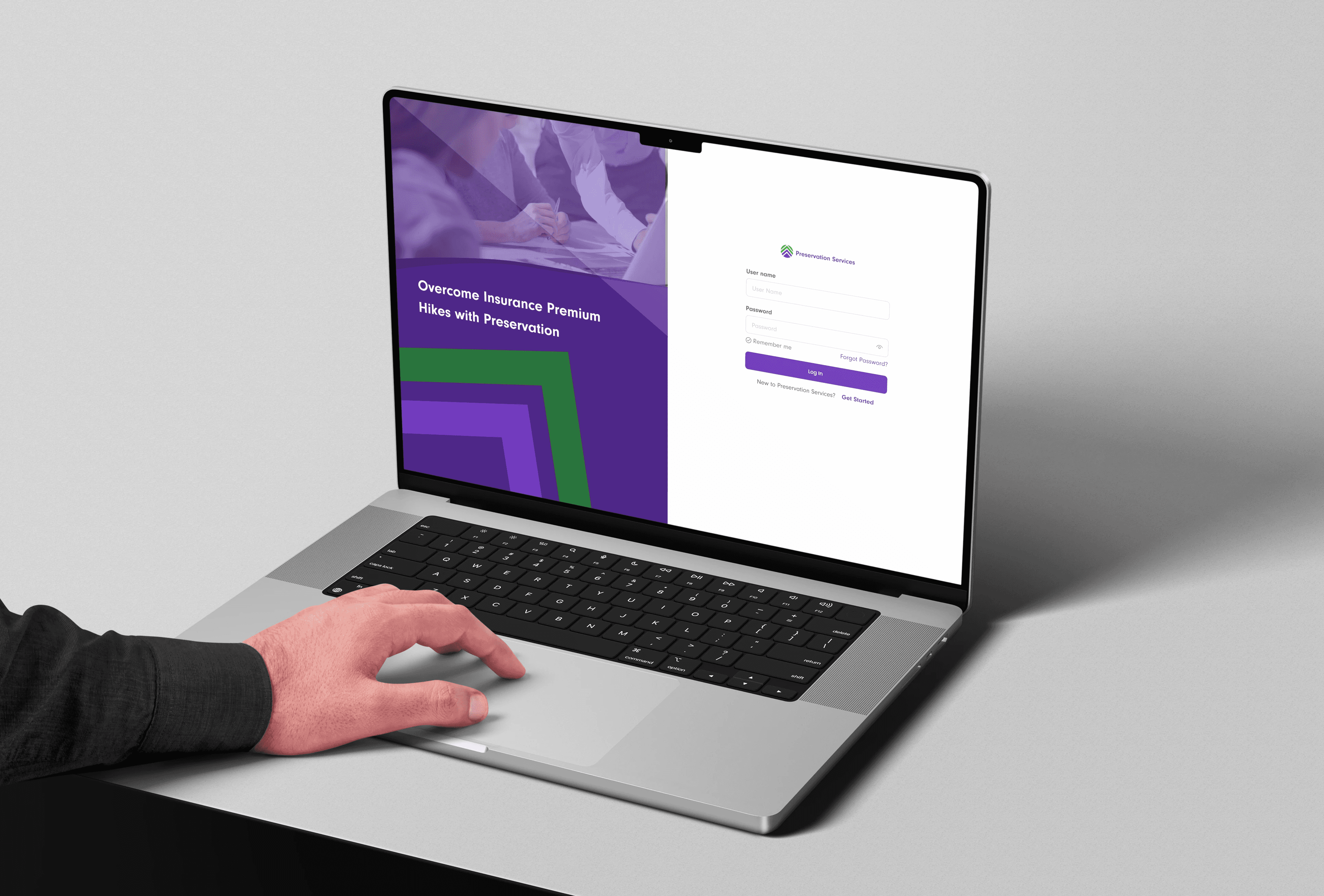
Designed a claim management system from scratch to support how building contractors and internal teams manage commercial insurance claims. The system brings structure to how claims are tracked, reviewed, and processed, improving visibility across stages and enabling faster, more reliable execution.
Role
Product Designer
Team
Developers, Stakeholder, Testing
Timeline
3 Weeks
The Problem
Managing commercial insurance claims for building contractors required coordinating multiple steps, documents, and updates across teams. Without a structured system, tracking claims became inconsistent and heavily dependent on manual coordination. Agents and admins struggled to maintain visibility into claim progress, while document handling and updates were fragmented. This led to delays, repeated work, and difficulty in managing claims efficiently.
The Opportunity
Define a system that supports how contractors and internal teams manage claims in real-world scenarios. The focus was to: Structure claim tracking across stages Improve visibility for ongoing claims Reduce redundant actions Centralize and organize document handling
Discovery
Initial Research
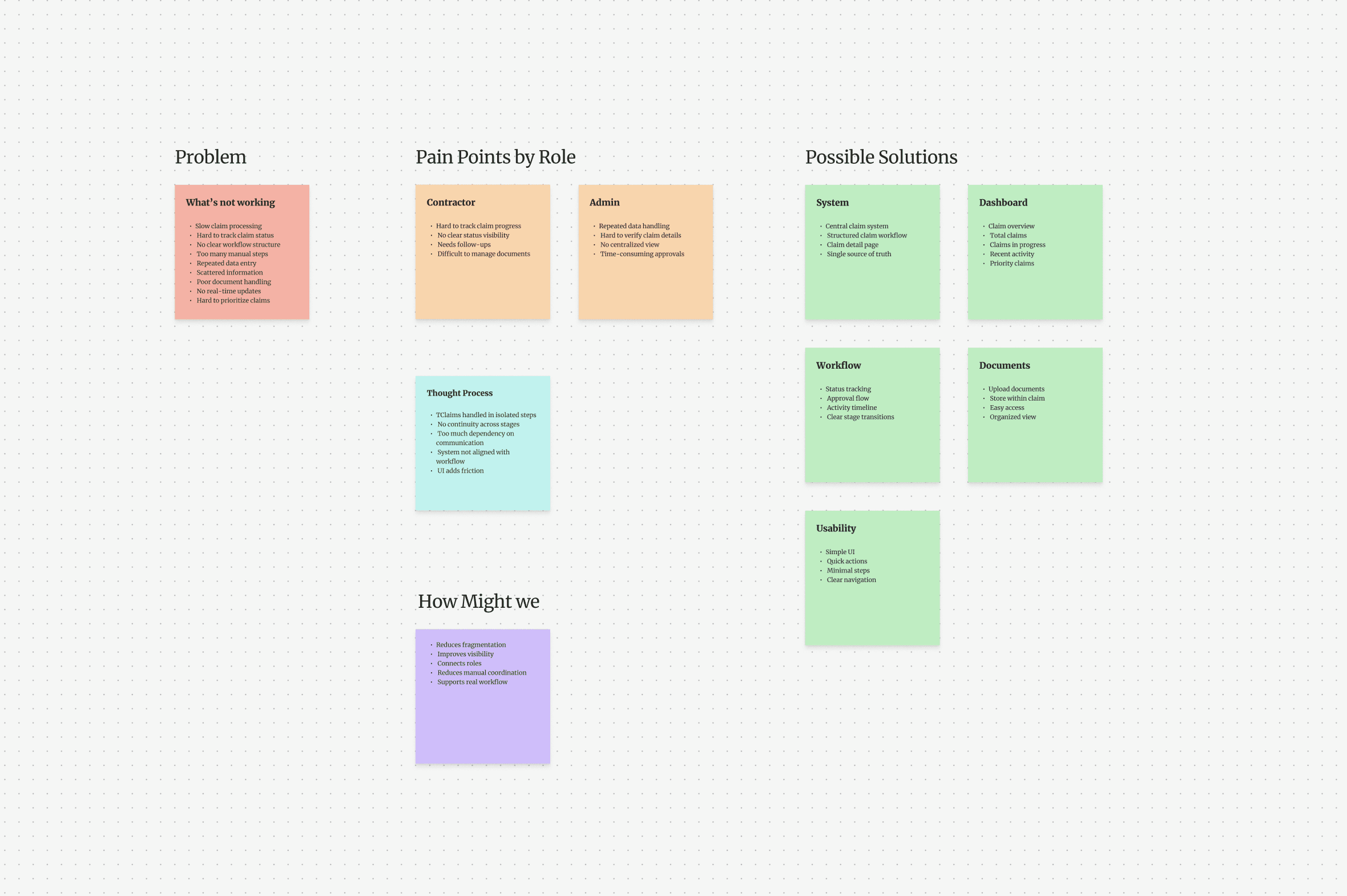
Analyzed how claims were managed across contractors and internal teams, identifying gaps in tracking, coordination, and document workflows.
Insight:
The challenge was not just usability it was the absence of a structured system to support operational workflows.
Competitor Analysis
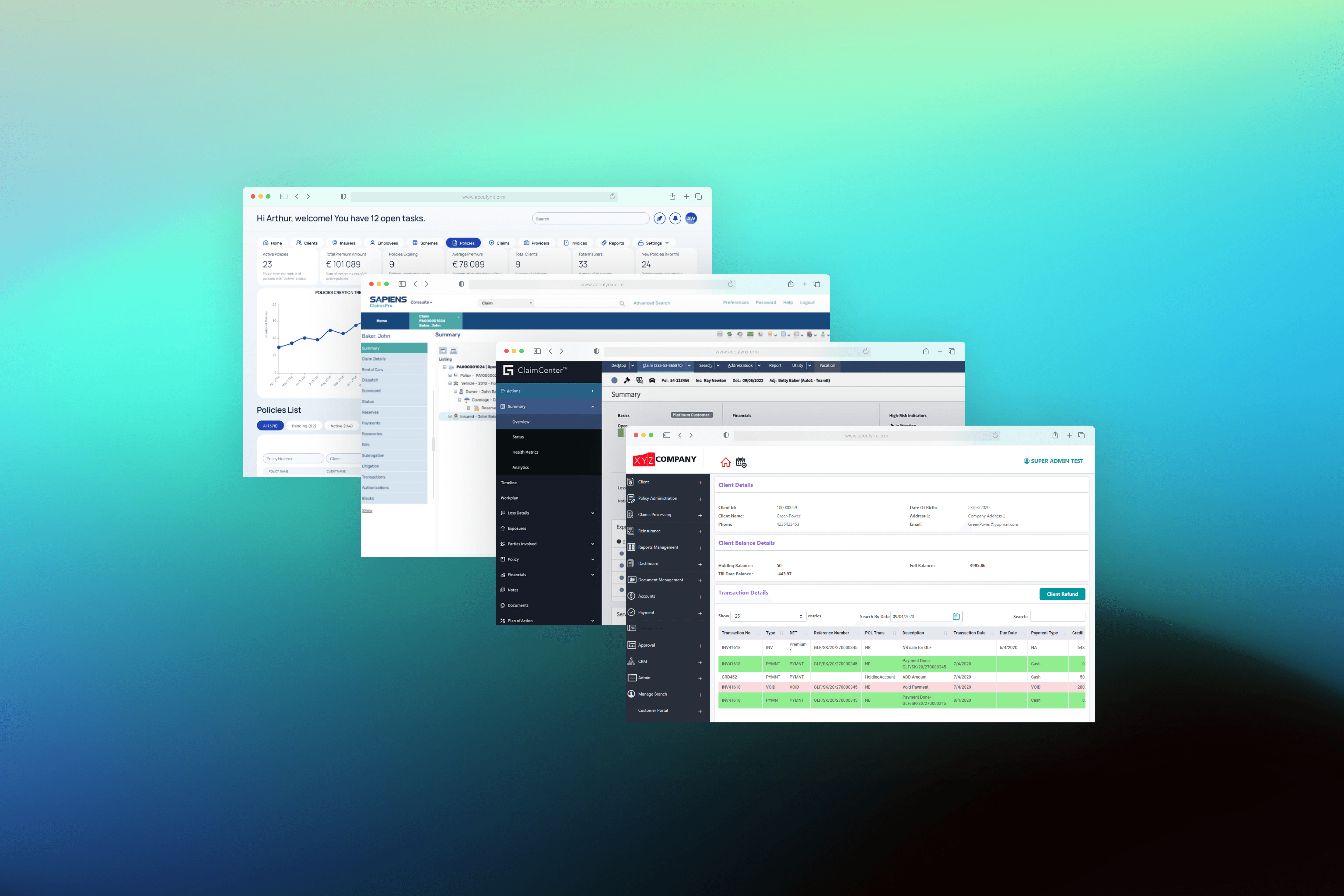
Reviewed claim and workflow tools used in insurance and contractor-driven operations.
Findings
Poor alignment between operational workflows and system structure
Limited visibility across claim stages
Disconnected document handling
Opportunity
Design a system aligned with how claims are actually processed in contractor workflows.
Stakeholder Sessions
Worked with agents and admins involved in claim processing.
Insights
Difficulty tracking claim progress across stages
High dependency on manual follow-ups
Redundant actions across workflows
Inefficient document handling
Opportunity Identified
The core opportunity was to design a system that introduces structure, visibility, and continuity into claim processing, while also making the experience simple and easy to use.
Instead of managing claims as isolated steps, the system needed to:
Provide a clear, continuous view of claim progress
Reduce dependency on manual coordination
Centralize claim data and documents
Enable faster and more predictable decision-making
Deliver a clean, intuitive interface that supports quick actions
What Got Shipped
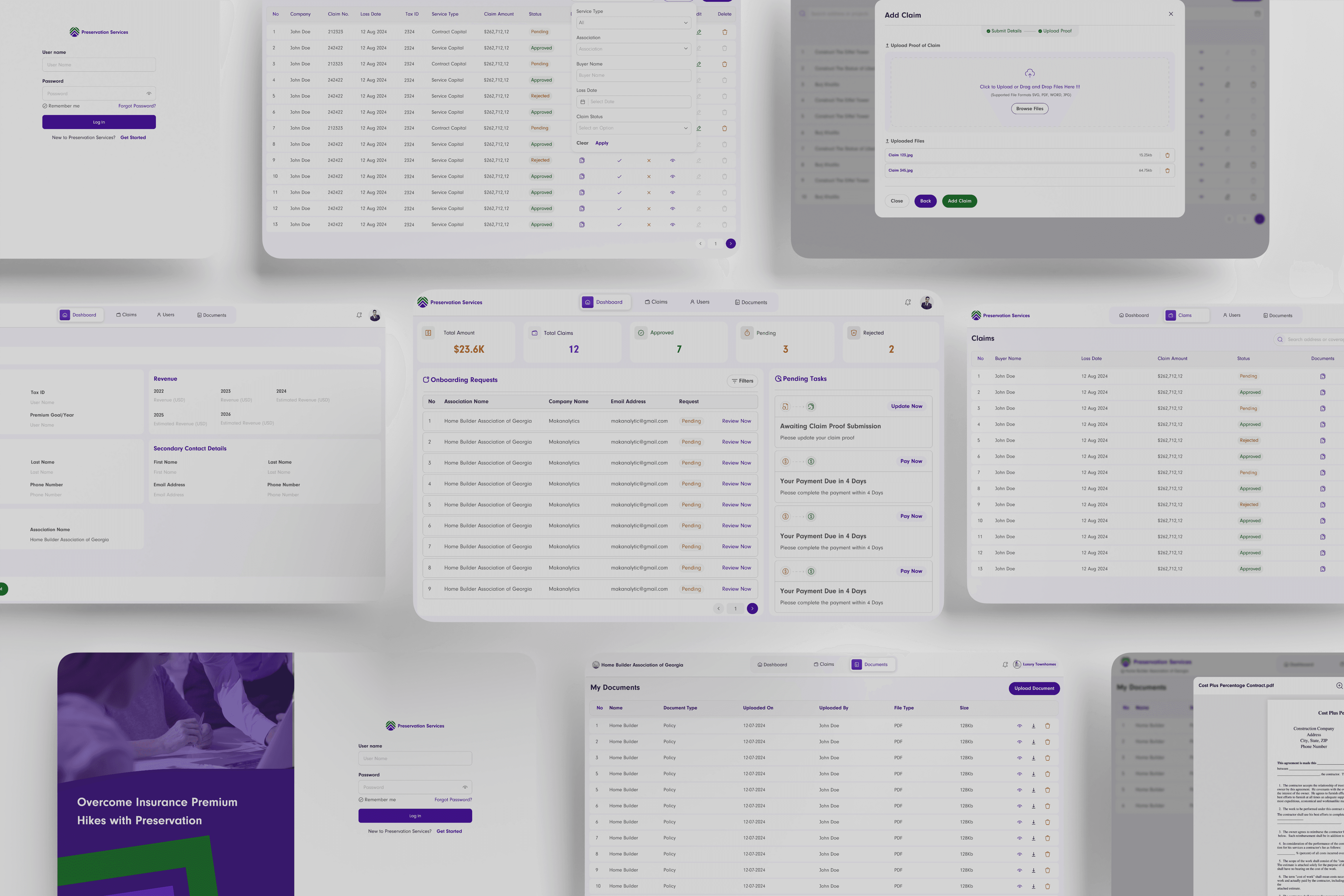
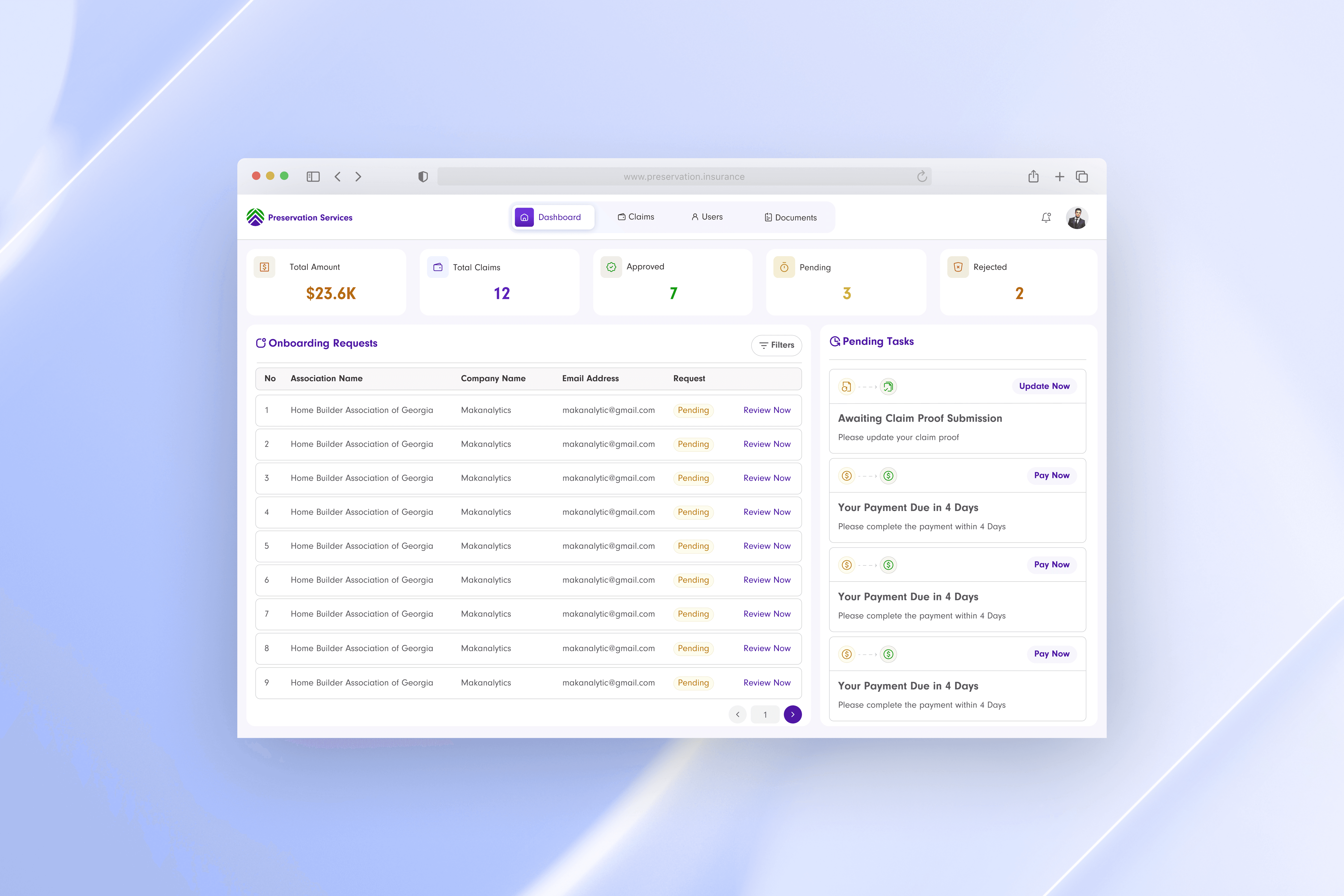
Centralized Claim Visibility
A dashboard provides a high-level view of all claims, helping users quickly understand workload, priorities, and status.
This enables faster decision-making and reduces reliance on manual tracking.
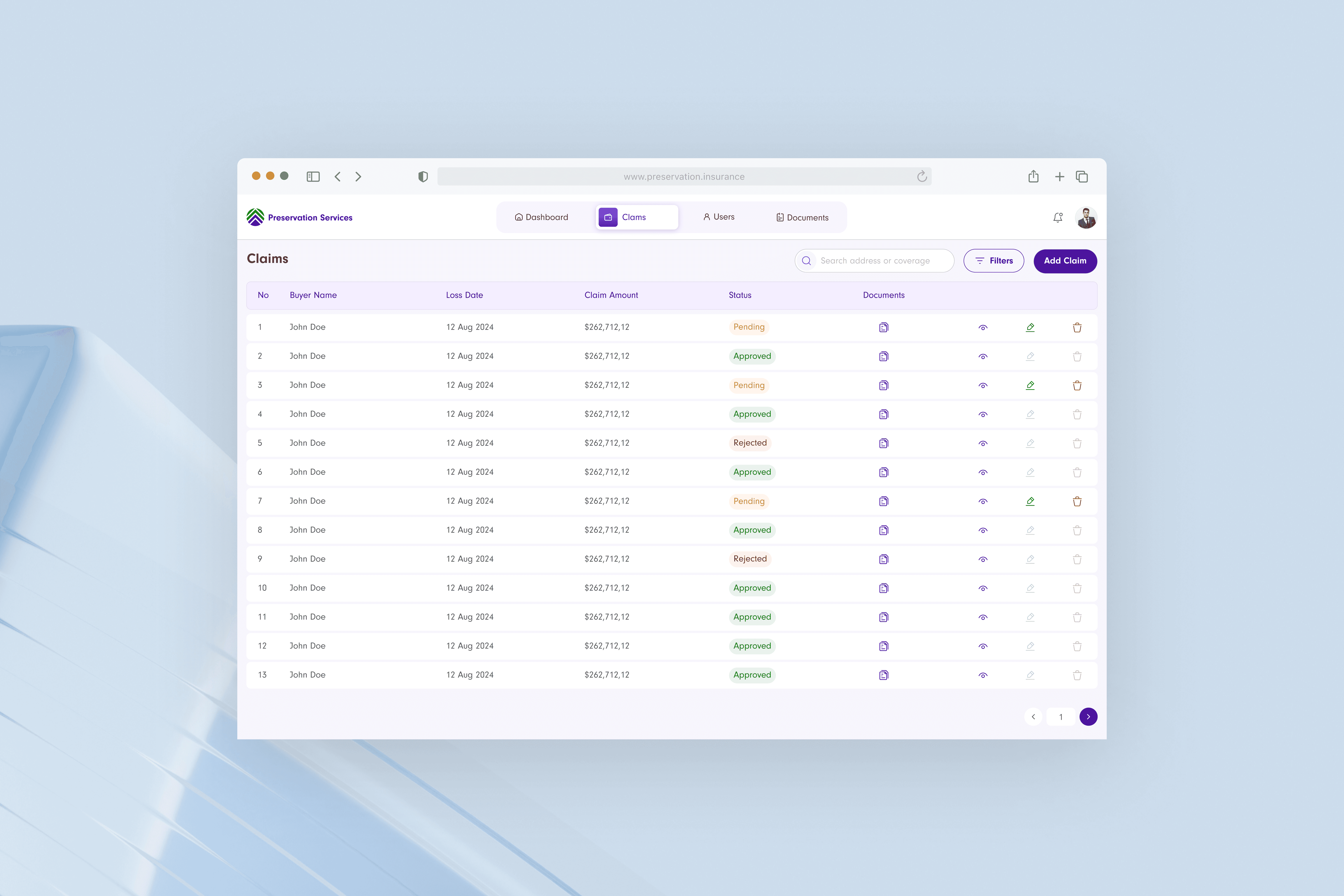
Structured Claim Management
A dedicated claims page acts as the central layer for accessing and managing all claims, improving discoverability and control.
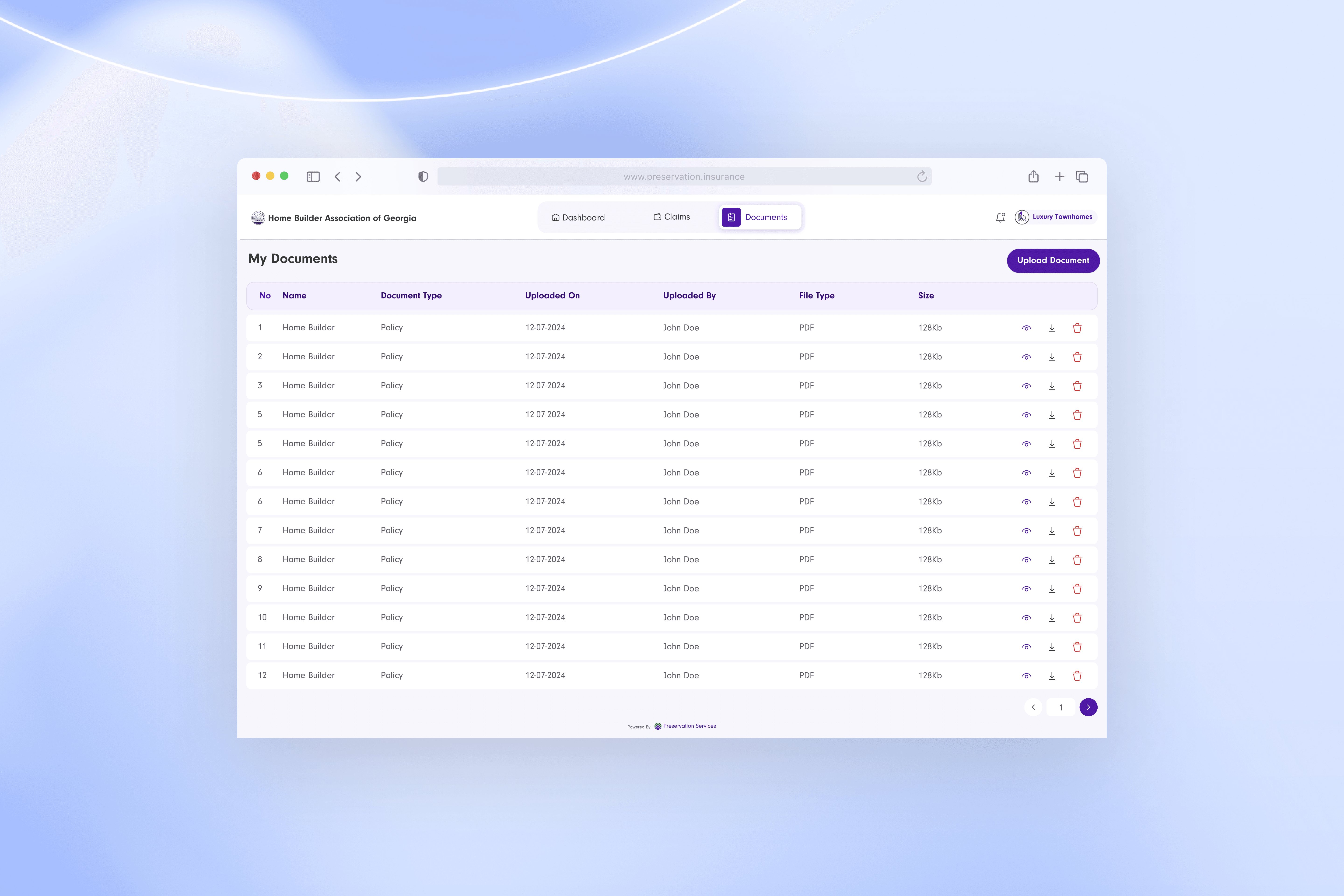
Integrated Document Management
Document handling is embedded within the workflow, allowing users to manage files directly within each claim.
This improves accessibility and ensures documents remain connected to the claim context.
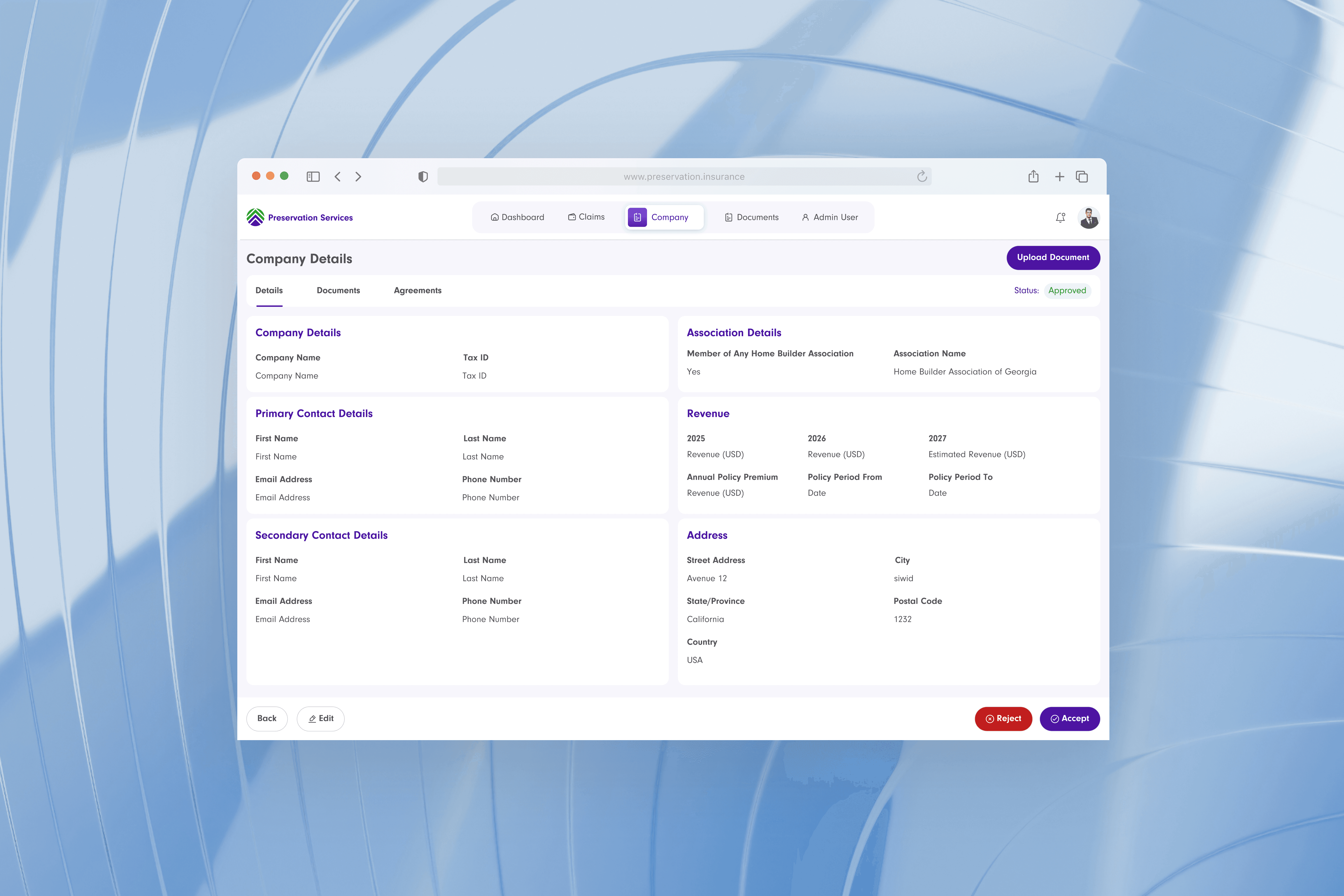
Context-Driven Claim Details
Each claim is designed as a single, unified view containing all relevant information, updates, and documents. This ensures users can track and manage claims without switching contexts.
Impact
Operational Improvements
Faster claim processing across contractor workflows
Reduced redundancy in claim handling
Improved efficiency in managing claims
Experience Improvements
Clear visibility across claim stages
Simplified tracking and coordination
Reduced dependency on follow-ups
System Improvements
Introduced a structured claim management system
Centralized document handling
Improved consistency and reliability of claim data

 Resume