Owning the Proposal Lifecycle Within the Priority Ecosystem
Priority Roofing
2026
Overview
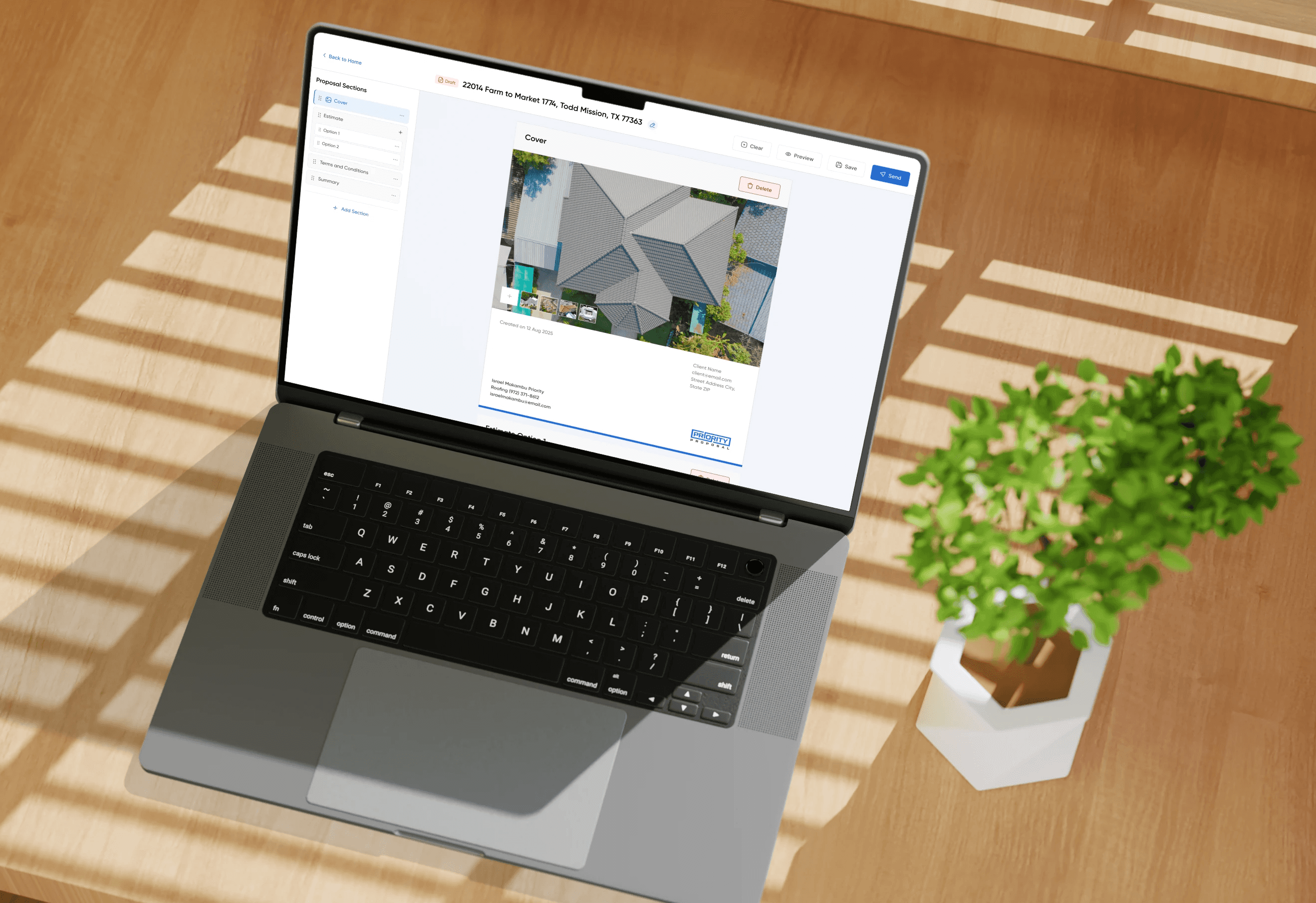
Designed a standalone proposal application within the Priority ecosystem to manage the end-to-end workflow of proposal creation and customer approval. The system replaces reliance on external tools by bringing assessment capture, proposal management, and signing into a single platform, improving efficiency, control, and visibility across the sales process.
Role
Product Designer
Team
Product Manage, Stakeholder, Developer, UX Designer
Timeline
Ongoing
The Problem
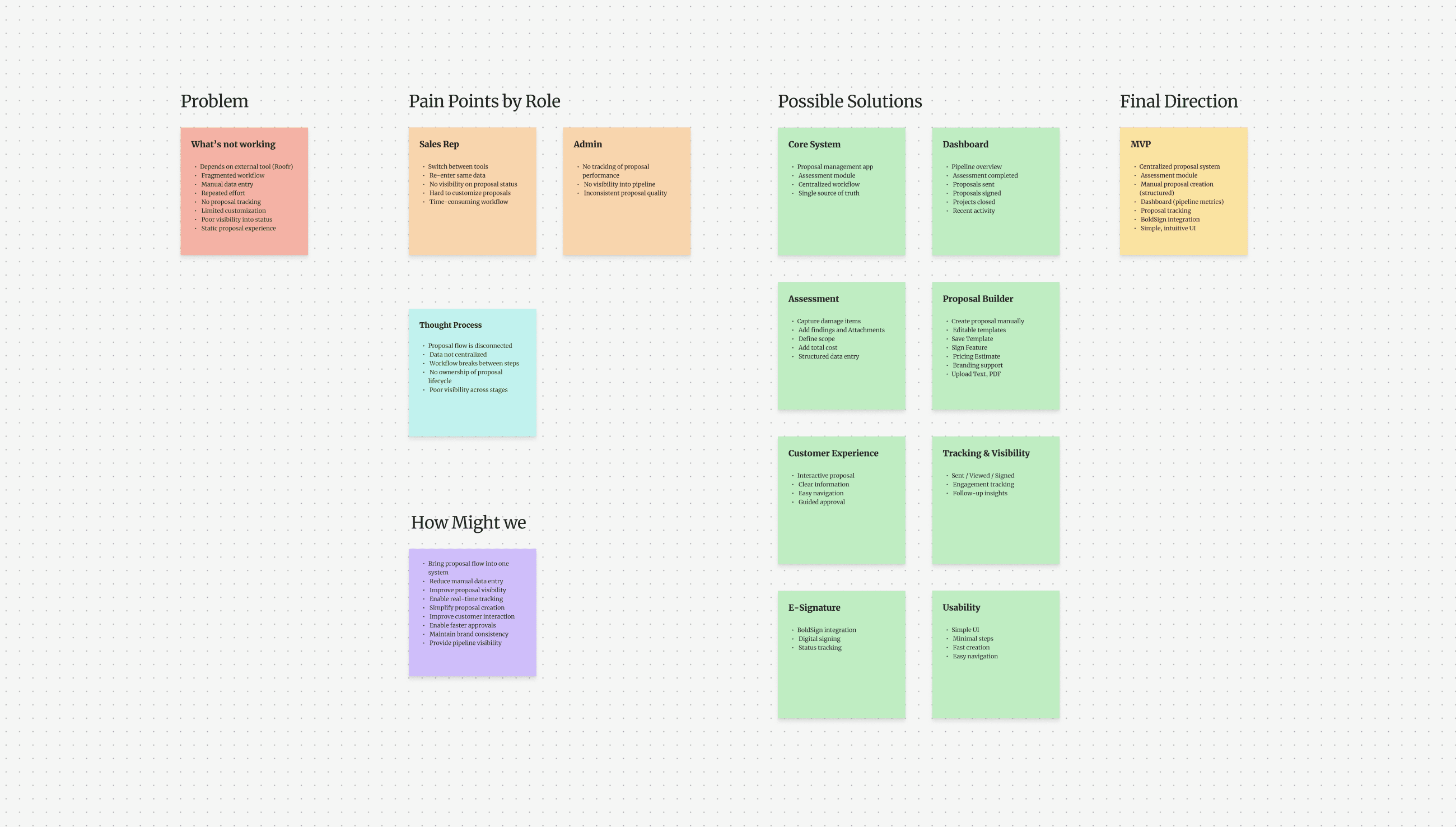
Proposal creation was handled through an external platform, requiring sales representatives to step outside their primary workflow to create assessments, generate proposals, and manage approvals. This created a fragmented experience where data was not centrally managed, workflows were disconnected, and visibility into proposal status was limited. Switching between tools increased manual effort, introduced inefficiencies, and made it difficult to maintain consistency across proposals. Additionally, reliance on a third-party system reduced control over customization, branding, and overall user experience. A critical part of the sales lifecycle existed outside the product ecosystem, resulting in operational gaps and a disconnected user journey.
The Opportunity
Bringing ownership of the proposal lifecycle into the Priority ecosystem required designing a system that manages both assessment capture and proposal workflows within a single platform. The focus was on eliminating dependency on external tools, establishing a structured workflow from assessment to approval, improving visibility into proposal engagement, and enabling greater control over data, customization, and branding. Rather than introducing full automation immediately, the approach prioritized creating a structured and scalable foundation that could support deeper workflow integration in future iterations.
Defining The Problem
Initial Research
Analyzed how proposals were created and managed using external tools, focusing on workflow inefficiencies, data handling, and user experience gaps. The process required switching between systems, leading to repeated effort, lack of continuity, and limited visibility into outcomes.
Proposal formats were static and disconnected from the workflow, making it difficult for both sales representatives and customers to interact effectively.
Competitor Analysis
Studied existing proposal tools used in roofing and sales workflows to understand how proposals are generated, customized, and managed. The focus was on evaluating features, workflow structure, and how these tools support both sales representatives and customers.
While these platforms offer capabilities such as proposal creation, customization, and e-signature, they function as standalone systems. Users are required to move between tools, resulting in fragmented workflows and lack of continuity with internal processes.

Stakeholder Session
Conducted detailed sessions with sales representatives and internal stakeholders after the kickoff to understand requirements, workflows, and expectations. These discussions helped define the scope, identify key challenges, and align on how the system should function within the ecosystem.
Sample Questions
How are assessments and proposals currently created?
What steps take the most time in the process?
What challenges do you face when switching between tools?
How do you track proposal engagement and approvals?
What level of customization is required in proposals?
Opportunity
Insights from research and stakeholder sessions reinforced the need for a system that integrates proposal creation into the core workflow.
The opportunity was to design a unified platform that manages assessment data, proposal creation, and approval within a single system—reducing fragmentation while improving efficiency and control.
What Got Shipped
Dashboard: Centralized Visibility Across Workflow
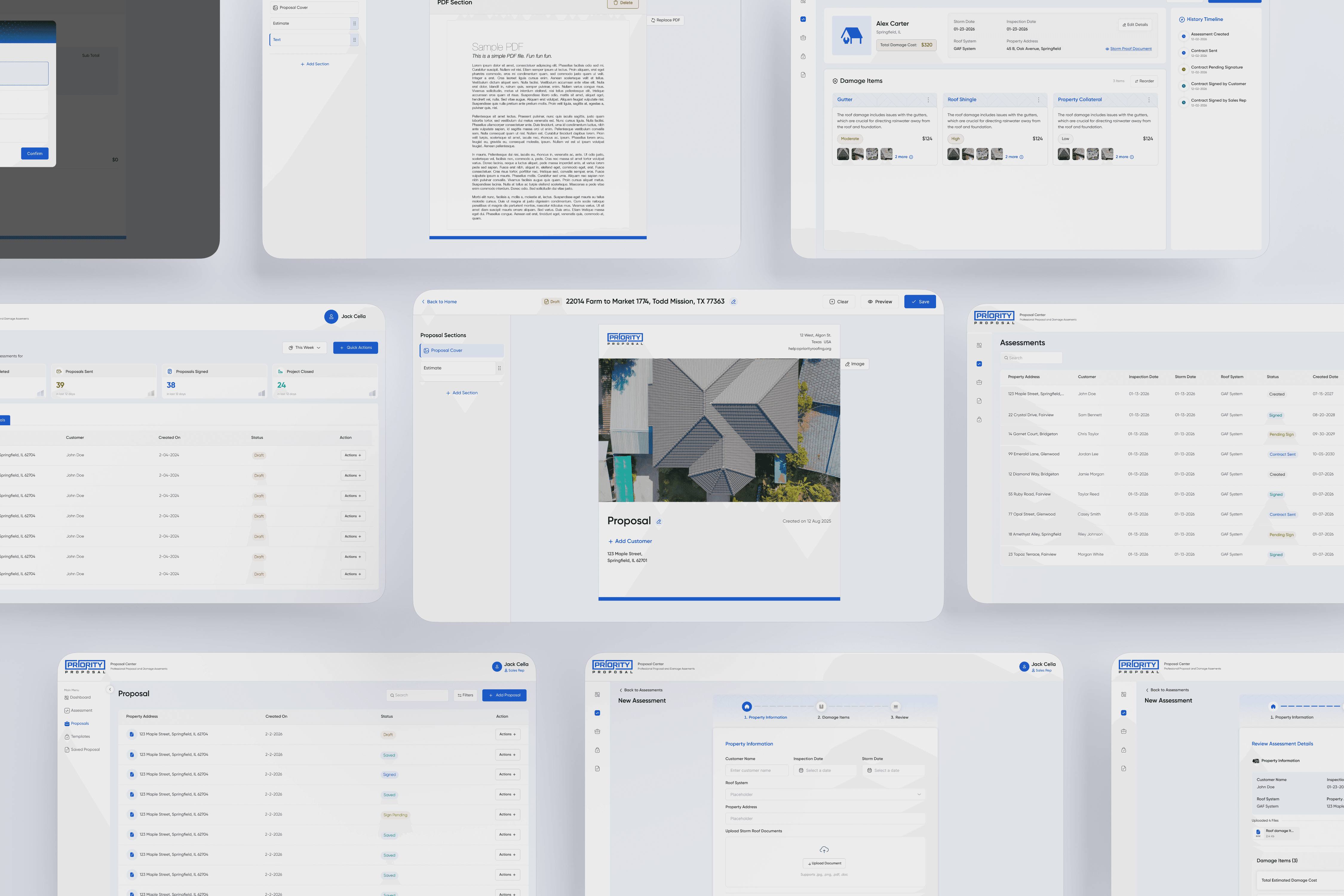
A high-level dashboard was introduced to provide a clear overview of the sales pipeline, surfacing key metrics such as initial assessments completed, proposals sent, proposals signed, and projects closed.
This enables sales representatives and managers to quickly understand progress across different stages of the workflow, identify bottlenecks, and prioritize actions. By also highlighting recent assessments and proposals, the dashboard improves accessibility and supports faster day-to-day decision-making without navigating across multiple modules.

Proposal Sharing and Real-Time Tracking
Proposals can be shared digitally through links, with built-in tracking to monitor key states such as sent, viewed, and signed.
This provides real-time visibility into customer engagement, allowing sales representatives to understand how customers interact with proposals and make more informed and timely follow-ups.


Integrated E-Signature Workflow (BoldSign Integration)
Digital signing is enabled through integration with BoldSign, allowing customers to securely review and sign proposals within the workflow.
This removes the need for manual or external signing processes, ensures compliance, and significantly reduces the time between proposal delivery and approval. The integration also allows sales representatives to track signing status in real time, improving visibility and control over the approval process.

Assessment Module: Structured Capture of Scope and Cost
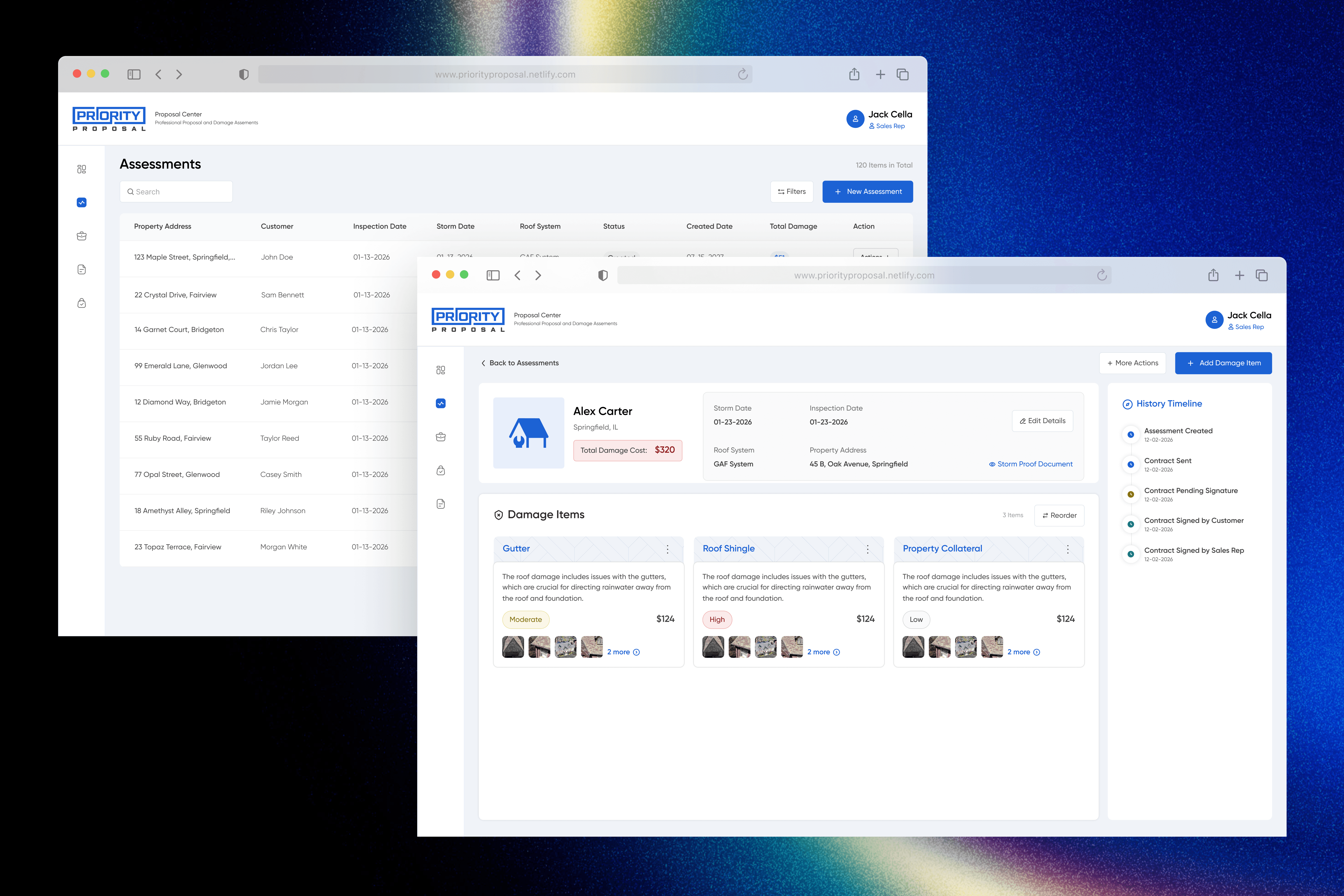
The assessment module was designed to capture all essential information required before proposal creation, acting as the foundation of the workflow. It includes a dedicated contract page where sales representatives document damage items, findings, and the overall scope of work, along with the total estimated cost.
This structured approach ensures that all relevant details are consistently recorded within the system, improving clarity and reducing dependency on external documentation. By consolidating assessment data into a single, organized view, the module enables more accurate proposal creation and better alignment between identified issues and proposed solutions.
Future Scope
The current system establishes a structured foundation for managing assessments and proposals within a single platform. Future iterations are focused on strengthening integration across workflows to further improve efficiency and continuity.
A key direction is enabling a direct link between assessments and proposals, allowing data to flow seamlessly and reducing manual input. This would support faster proposal creation and ensure stronger consistency between identified scope and final outputs.
Another important step is deeper integration with the Priority CRM, enabling the proposal system to function as a more native extension within the ecosystem. This would allow users to access, manage, and track proposals directly within their existing workflows, improving accessibility and reducing context switching.
These enhancements aim to evolve the system from a structured workflow into a fully connected experience, where data, processes, and interactions operate seamlessly across the product ecosystem.

 Resume